The campaign
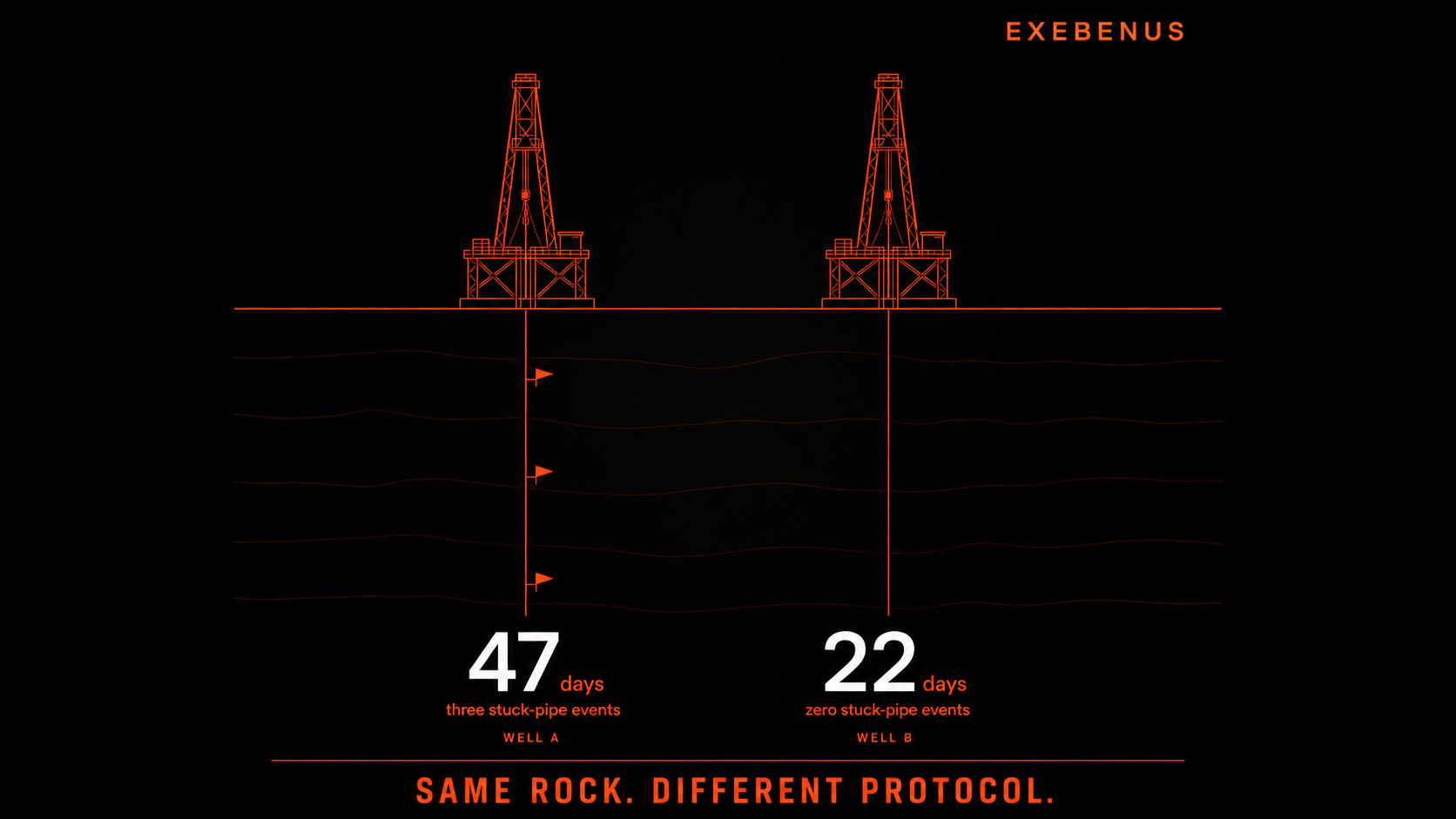
Two wells in the same field of a national oil company campaign in Latin America, drilled by the same turn-key contractor. Same HPHT formation. Same reactive-clay and conglomerate sequence. Same field history of chronic stuck pipe.
The first drilled to TD in around 47 days, with three stuck-pipe events along the way.
The next drilled from 2,660 m to 6,089 m on a single BHA in around 22 days, with zero stuck-pipe events to TD.
Same rock. Different protocol.
The retrospective
Spotter wasn't on the first well live. After it finished, Exebenus ran the surface-data record through the system retrospectively.
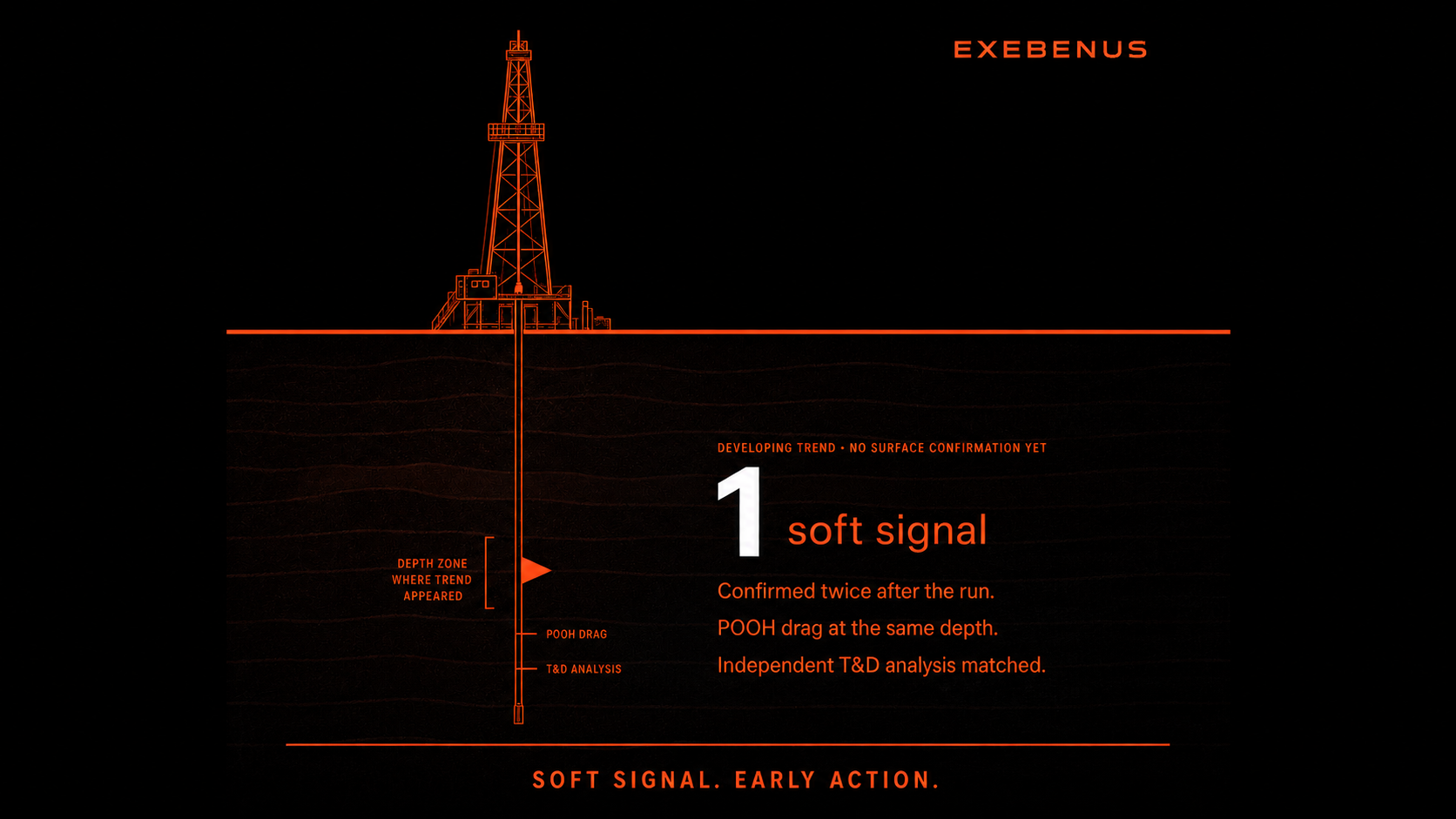
The Vibration Agent generates continuous vibration estimates from surface data, while downhole measurements only uplink every few minutes. Run on the offset record, those estimates were already trending up ahead of every stuck-pipe event on the well. High vibration and string stall-outs were the dominant warning signature for stuck-pipe risk in this field.
The signal had been in the data the whole time. Nobody was watching for it yet.
The protocol
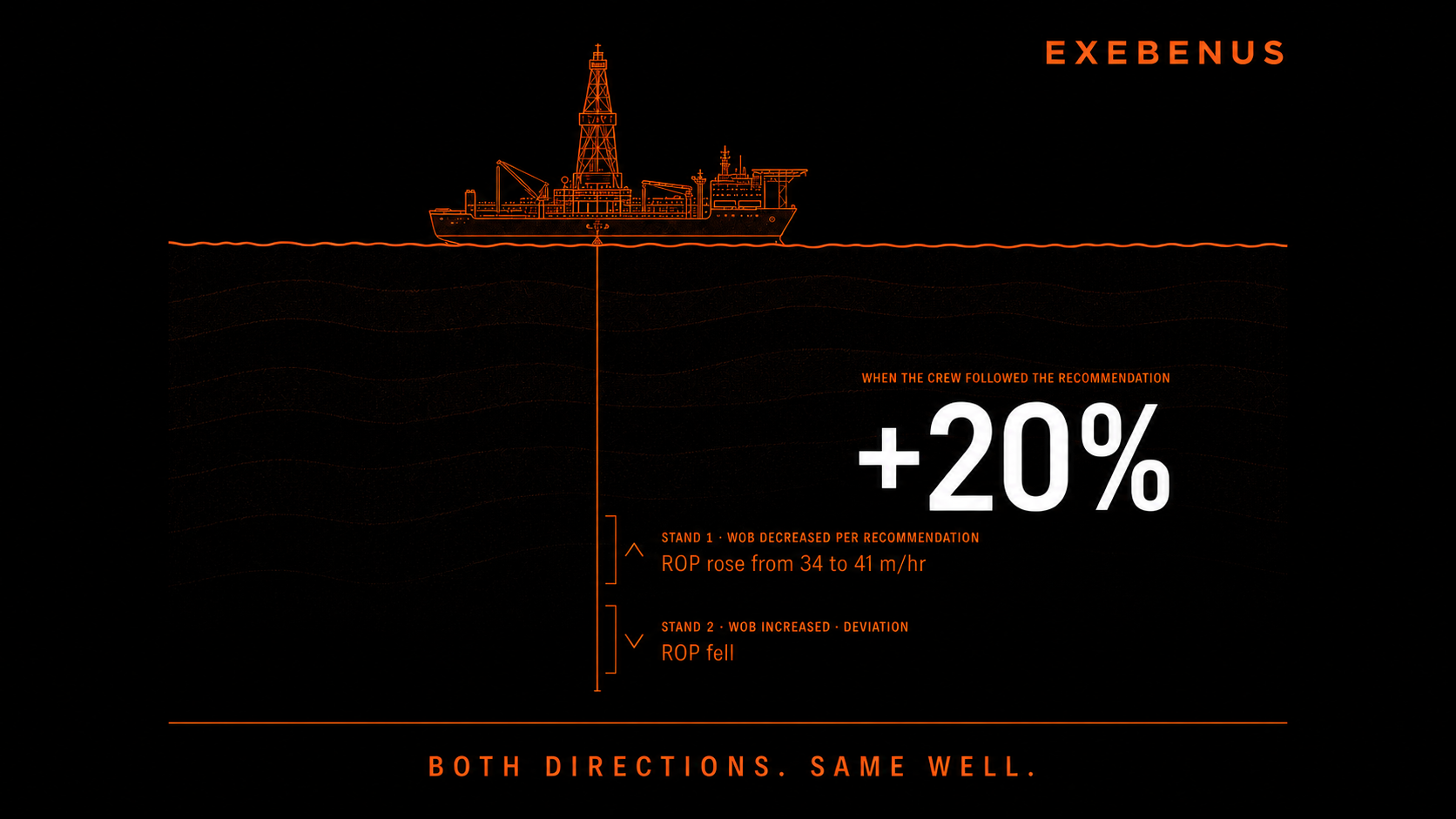
The second well went in with a protocol built on that finding. Full-stand ream on every connection, no exceptions. Sweep every stand. RPM held at 150 to 155 for safe torque margin. Every stall-out treated as an emergency rather than a connection nuisance.
That's not easy to hold for a full interval. The crew held it on every stand.
The second well
This time Spotter ran live throughout. The crew tracked its warnings and dysfunction signals against the protocol stand by stand, and brought the well to TD with zero stuck-pipe incidents. A clean result on a section the field's history said should have produced at least one.
What we're saying, and what we're not
The crew drilled the well. The protocol was theirs to hold, and they held it. Spotter's contribution came in two cuts of value on the same campaign.
The retrospective diagnosed the field. The real-time run held the watch.