Static Friction in a 16" Section: Flagged While Drilling, Confirmed by Torque and Drag
The well
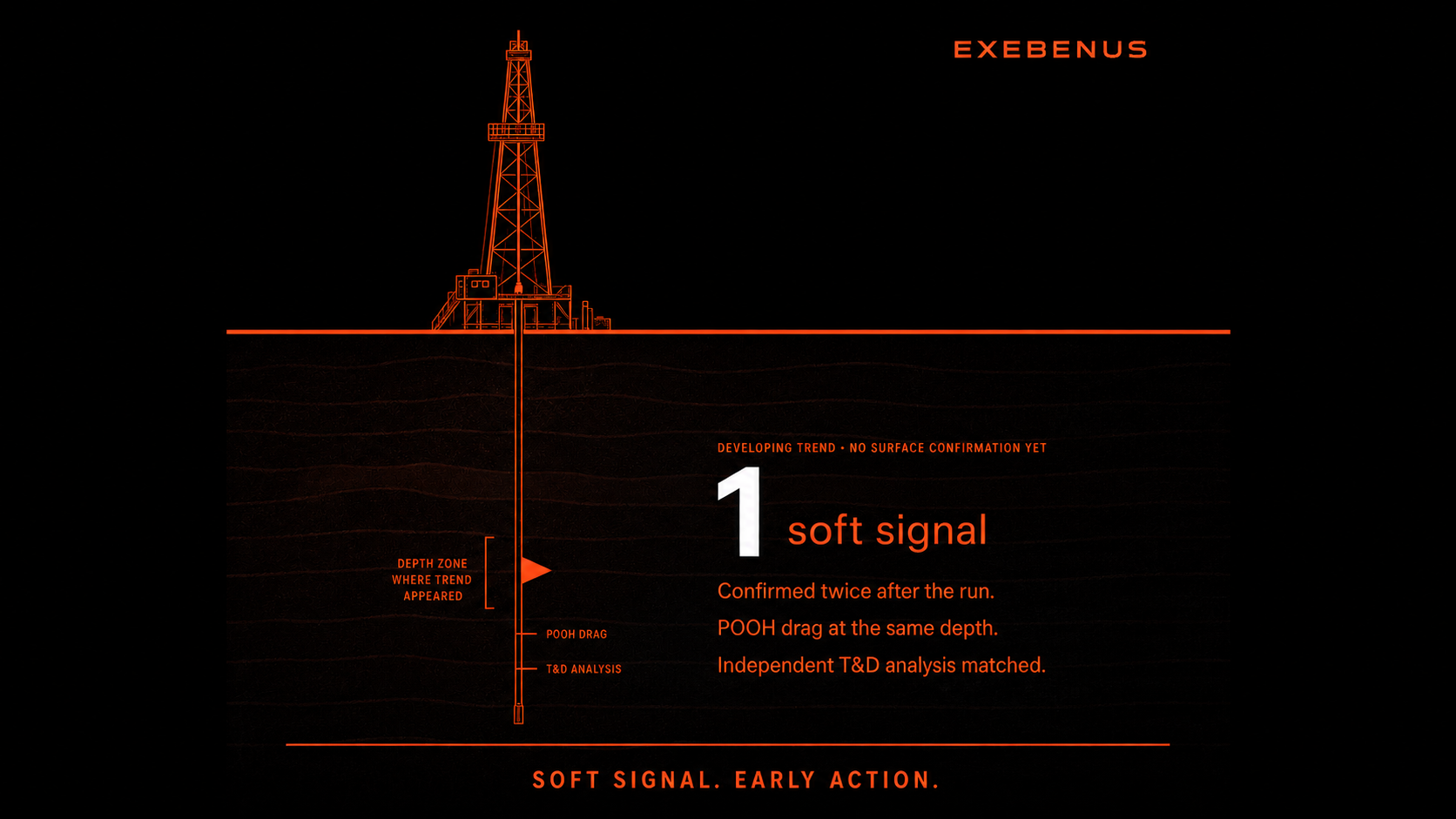
A land campaign for a Middle East national oil company. Toward the end of a 16" section, a static-friction trend appeared in the Spotter view, before it had escalated into anything obvious on surface gauges.
The drilling team logged the depth as a flagged zone.
The confirmation
When the pipe came up through the same interval, drag was encountered exactly where Spotter had pointed.
Post-run torque-and-drag analysis later confirmed an unforeseen differential-sticking zone at that depth. The flag was independently confirmed twice: by the POOH drag, and by the T&D analysis.
The casing run
When the casing run came, the team was prepared. They washed the casing down through the area rather than encountering the sticking zone at depth. Casing ran to TD without incident.
What we're saying, and what we're not
Catching the risk was the first half of the case. The second half was what the team did once the flag was confirmed. They treated the depth as a known obstacle from there on, and the casing run was planned around it.
Continuous monitoring is what turns a flagged trend into operational intelligence by the time the next pass comes through.
Flagged while drilling. Confirmed on POOH. Confirmed again by T&D. Planned around by the casing run.